

A senior sales manager in an industrial company had spent several years building a strong record. His region consistently exceeded its targets, two important customer accounts had been recovered after serious service issues, and his team was known for delivering reliably in difficult situations.
When the position of Regional Business Head became vacant, he expected to be considered. Instead, the company appointed someone else.
He discussed the decision with his manager, who told him that his performance was not the issue. He was considered one of the strongest people in his current role. The concern was whether he had demonstrated readiness for the broader responsibilities of the new position, including managing across functions, developing other managers, making larger commercial trade-offs, and taking responsibility for results he could no longer control directly.
The conversation changed how he viewed his career. He had spent years proving that he could perform his role exceptionally well, but had paid less attention to demonstrating that he could operate at the level above it.
This is why a job promotion does not always follow a strong performance record. Good performance shows that you can deliver in your current role. Promotion requires evidence that you are ready to take responsibility for a broader and more complex set of outcomes.
Idea in Brief
The Problem
Many professionals assume that consistently performing well in their current role should naturally lead to a promotion. Strong results matter, but they do not always demonstrate that someone is ready to take on a broader role with greater responsibility and complexity.
Why It Happens
Professionals tend to focus on what they are measured on today—targets, responsibilities, execution, and individual results. As a result, they may spend years becoming better at their current role without demonstrating how they would handle the different demands of the next one.
The Insight
A promotion is not simply recognition for past performance. It is also a judgment about future responsibility. As the level of a role increases, the ability to think beyond one’s own responsibilities, influence others, handle ambiguity, and take ownership of broader outcomes becomes increasingly important.
The Takeaway
Doing your job well remains essential, but career progression requires more than repeating strong performance. Professionals who want to move forward need to gradually demonstrate that they can operate effectively at the level they want to reach.
Doing Your Job Well Is Only the Beginning
We all understand why strong performance matters. If we cannot deliver results, meet commitments, and handle our responsibilities well, it is difficult to make a credible case for greater responsibility. Good performance is the foundation on which career progression is built.
But as we move into more senior roles, the nature of performance changes. I have seen this often in professional careers. Someone may be an excellent salesperson, engineer, finance professional, or operations manager, yet find that the next role demands capabilities that were not central to their previous one.
A strong sales executive, for example, may be exceptional at winning customers and exceeding targets. As a sales manager, the expectation changes. We now look at whether that person can build a capable team, develop people, manage performance, make trade-offs and deliver results through others.
The same applies across functions. As responsibility grows, we are expected to look beyond our own tasks and understand the wider business, work across functions, deal with ambiguity and take ownership of outcomes that cannot be achieved through individual effort alone.
This is why doing your current job well is necessary, but it does not by itself demonstrate readiness for the next role. We need to show, through our actions and responsibilities, that we are already beginning to operate beyond the boundaries of the position we hold.
What Changes at the Next Level
A plant operations manager I once worked with was highly regarded for keeping his facility efficient. He knew the operation thoroughly, responded quickly to problems, and had built a disciplined team. When he was promoted to oversee several facilities, he initially approached the new role in much the same way. He became involved in operational issues across every location, reviewed too many details himself, and often stepped in to solve problems that his site managers could have handled.
Within a few months, he realized that the expectations of the new role were different. He had to decide where his attention was most valuable, develop the managers reporting to him, compare performance across sites, and make decisions that affected the wider business. He could no longer rely on his own knowledge of every operational detail to produce good results.
At the next level, we are expected to think more broadly, make decisions with greater consequences, and achieve results through other people. The habits that made someone successful in an earlier role can sometimes become limiting when the job requires greater delegation, wider business thinking, and more influence across the organization.
As we progress, we need to remain accountable while giving others more ownership. We need to decide where our involvement adds value, what can be delegated, and which problems genuinely require our attention. When professionals begin doing this before they receive the title or promotion, they provide clearer evidence that they are ready for greater responsibility.
Why Good Performance Is Not Always Enough for a Job Promotion
Good performance is an important part of career progression, but promotion decisions involve more than a record of strong results. As responsibilities increase, organizations also look at how someone handles wider problems, works through others, and takes ownership beyond their immediate role.
We often see this with professionals who become known as the people who can always be relied upon. They solve difficult problems, take responsibility, and deliver consistently. These qualities are valuable, but they do not automatically demonstrate readiness for a substantially broader role.
Your Current Role Measures Something Different
The expectations of a role change as we move up. An individual contributor may be judged largely on the quality of their own work. A manager has to create results through a team. A senior leader may be responsible for outcomes involving several functions or markets.
The question is therefore not only whether we have performed well, but whether we have shown that we can handle the wider demands of the next role.
When Being the Problem Solver Becomes a Limitation
Strong professionals often become the person everyone turns to when something goes wrong. They know the details and can usually solve the problem quickly.
I have seen this become a limitation when someone moves into a role where they can no longer be personally involved in every important issue. If the team still depends on the manager to make every difficult decision, there is little evidence that the manager can create results through others.
From Personal Results to Wider Outcomes
As responsibility grows, we have to work with people, functions and resources that we do not control directly. We have to set priorities, delegate effectively, influence stakeholders and make decisions that may involve competing interests.
This is a different form of performance. Our own effort still matters, but it is no longer enough to determine the outcome.
The Question Behind the Promotion
I find it useful to ask ourselves a more practical question: What have I done that shows I can handle the responsibilities of the next role?
We do not need to perform someone else’s job before receiving the promotion. We do need to demonstrate, through our actions, that we are capable of taking on broader problems, helping others succeed, and thinking beyond the boundaries of our current position.
This is the evidence that can turn a strong performance record into a credible case for greater responsibility.
Start Showing You Are Ready
If we accept that promotion is partly about readiness for a broader role, the practical question becomes what we can do about it. The answer is not to start behaving as though we already have the promotion or to take over responsibilities that belong to our manager. It is to gradually demonstrate that we can handle a wider level of responsibility while continuing to perform well in our current role.
The most effective way to do this is through the work we already have. We do not always need a new title, a bigger team, or a formal change in responsibilities to demonstrate readiness. Often, the opportunity is already present in the problems around us.
Take Ownership Beyond Your Immediate Responsibilities
When we see a problem affecting the wider team or business, we can choose to understand it rather than simply work around it. That may mean coordinating with another function, improving a process, or taking responsibility for an issue that does not sit neatly within our job description.
This does not mean saying yes to everything. It means recognizing where our contribution can have a wider impact and taking ownership when the situation genuinely calls for it.
Help Other People Become Better
At the next level, our value increasingly comes from what we enable other people to achieve. We can start building this capability before we become formal managers.
That may involve helping a colleague understand a difficult customer situation, coaching a junior team member, sharing knowledge, or giving someone the opportunity to take ownership of a problem. When we help others perform better without needing to remain personally involved in every detail, we begin to demonstrate a different kind of leadership.
Think Beyond the Immediate Task
One of the simplest ways to show readiness is to understand why a task matters rather than focusing only on completing it.
I have always found this distinction important in professional life. If we are asked to reduce a cost, for example, we should understand what the saving means for quality, customer service, operations, and the wider business before recommending a solution. This broader thinking helps us move from completing assignments to understanding outcomes.
Take on Problems That Need More Than Execution
There are always problems in an organization that does not have clear owners or straightforward answers. They may involve several departments, competing priorities, or decisions that have been postponed because they are difficult.
These situations can provide valuable opportunities to demonstrate readiness. We learn to gather different perspectives, make a reasonable judgment, involve the right people, and stay accountable for the outcome. We also become more comfortable working without having every detail defined in advance.
The objective is not to prove that we are already ready for every aspect of the next role. It is to give people around us credible evidence that we are developing the capacity to handle it. Over time, those small demonstrations of broader responsibility become much more meaningful than simply telling our manager that we are ready for promotion.
What Managers Look for Before Promoting Someone
Managers rarely expect a person to be perfect before taking on a larger role. What they look for is evidence that the person can handle greater responsibility without needing the same level of direction, supervision, or intervention.
This is where Nelson Mandela offers a useful leadership example. His leadership was not built around personal control of every decision. He worked with people who held very different views, built relationships across deep divisions, and understood that lasting progress required bringing others with him. The broader lesson for professionals is that leadership at a higher level depends increasingly on how effectively we influence, develop, and align other people.
In our own careers, this can show up in much smaller ways. A manager may notice that we can handle a difficult customer without escalation, bring different functions together when a problem crosses departmental boundaries, or help a colleague become capable of handling something we previously handled ourselves. These actions provide a more meaningful indication of readiness than simply asking for the next title.
Managers also look for consistency. Taking ownership once is useful, but repeatedly demonstrating sound judgment, reliability, collaboration, and initiative gives them greater confidence that the behavior will continue when the responsibility becomes larger.
The important point is that readiness is usually observed over time. We may not always know exactly when a promotion decision is being considered, which is why the strongest approach is to build the evidence through our everyday work rather than trying to create a case at the last moment.
The Trap of Waiting for the Promotion
One of the most common mistakes is believing that we should wait for the promotion before taking on the responsibilities associated with it. In practice, the sequence often works differently. We are usually given greater responsibility when there is already some evidence that we can handle it.
That does not mean working for free or accepting an undefined workload. It means looking for sensible opportunities to broaden our contribution within the role we already have. We can take ownership of a cross-functional problem, mentor someone, lead an important project, or bring a neglected issue to management with a practical solution.
There is an important balance here. We should not become so focused on proving our readiness that our current performance suffers. The strongest signal is usually the ability to deliver what is expected today while gradually demonstrating that we can handle more tomorrow.
When this becomes part of how we work, the promotion conversation becomes less about asking someone to take a chance on us and more about recognizing evidence that has already been built.
The Real Meaning of Career Readiness
Career readiness is not about knowing every part of the next job before we receive it. It is about showing that we can take on greater responsibility with reasonable confidence and less dependence on others.
We can assess this ourselves by looking at the problems we are trusted with, the decisions people seek our input on, and the extent to which others can succeed because of our contribution. If our influence is gradually extending beyond our own tasks, teams, or function, we are building evidence of readiness.
This also gives us a more useful way to think about career progression. Instead of waiting for an organization to tell us that we are ready, we can examine where our responsibilities, thinking, and contribution have already begun to expand. That is where sustainable career growth usually starts.
The Takeaway — Think Beyond Your Current Role
A strong career is not built by waiting for the next title and then changing how we work. The more useful approach is to build the capabilities and habits that the next role will require while continuing to perform well in the role we hold today.
We should therefore look beyond our targets and responsibilities and ask whether we are becoming someone who can handle greater complexity, make sound decisions, develop others and take ownership of wider outcomes. When that progression is visible, a promotion becomes a natural recognition of growing responsibility rather than the sole measure of career progress.
Ultimately, doing our current job well remains essential. But if we want to move forward, we also need to show that our contribution is gradually becoming broader than the job itself.
About the Author
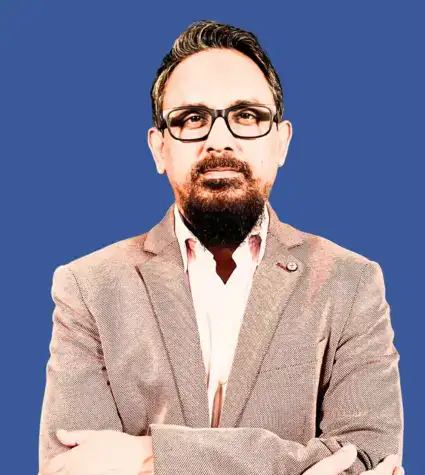
Sarwar Alam is a Regional Business Leader with 18+ years of experience building and scaling B2B businesses across India, the Middle East, Africa, and Asia. He has led multi-country P&L, go-to-market strategy, revenue growth, market expansion, and cross-functional teams across Sales, Marketing, Operations, and Customer Functions.
His career includes leadership roles with 3M, ExxonMobil, Diversey, and Betco, with experience across the Hygiene, Automotive Aftermarket, and Lubricants industries. He holds an MBA from Cochin University of Science & Technology (CUSAT) and a Bachelor of Computer Applications from IGNOU.
Sarwar is the Founder of Sarwar Alam Insights and Founder & CEO of CATAGROW. He is also the author of Bihari Boy in Kerala, a book exploring identity, resilience, and life experiences through personal storytelling.
Through Sarwar Alam Insights, he writes about leadership, career growth, strategy, and life wisdom, drawing on professional experience across diverse markets and organizations.
Disclaimer: This article is based on personal experience and insights. It does not constitute financial, legal, or medical advice.