The Invisible Crisis at Work
A mid-level business leader was running a regional portfolio with consistent results. His numbers were reliable, his market understanding was strong, and his team performance remained stable over multiple cycles. In most organizations, this level of performance is assumed to build trust at work over time.
When a larger role became available, the internal evaluation did not move in his favor. The decision was not based on capability gaps. It was shaped by a different layer of assessment—how he handled uncertainty, how he engaged with cross-functional stakeholders, and how much confidence senior leadership had in his judgment in unstructured situations.
None of these factors was formally documented. They did not appear in performance dashboards or review summaries. But they influenced the outcome more than the measurable results he had delivered.
This pattern is visible across organizations and industries. Professionals continue to build skills, deliver outcomes, and accumulate experience. Yet progression slows down at a certain point, not because capability is insufficient, but because another variable starts carrying more weight in decision-making.
That variable is trust—formed gradually through behavior, consistency, and perceived intent, and often understood clearly only when it is missing.
Idea in Brief
The Problem
Many professionals deliver strong results, build solid experience, and continuously upgrade their skills. Yet, at a certain point, career progression slows down. Opportunities become selective. High-visibility roles go elsewhere. The gap is not always visible in performance metrics, which makes it harder to diagnose.
Why It Happens
Organizations do not make critical decisions based on performance alone. As roles become larger and more ambiguous, leaders rely on judgment calls that go beyond measurable output. In these moments, what matters is not just what someone has delivered, but how much confidence others have in their ability to handle complexity, uncertainty, and people dynamics. This is where trust at work begins to influence decisions in a deeper way.
The Insight
Career growth at senior levels is shaped by an accumulated layer of credibility, reliability, and perceived intent that can be described as Trust Capital. It is built over time through consistent behavior, clarity in communication, and the ability to reduce uncertainty for others. Unlike skills, it is rarely taught explicitly, yet it plays a decisive role in progression.
The Takeaway
Professionals who understand and intentionally build trust at work create a structural advantage. They are given larger responsibilities earlier, included in critical decisions, and relied upon in high-stakes situations. Over time, these compounds create opportunities that performance alone cannot unlock.
Understanding the Trust Deficit at Work
The trust deficit at work does not appear suddenly. It builds gradually, often without clear signals, and becomes visible only when decisions start going in unexpected directions.
In many organizations, professionals assume that consistent performance will automatically strengthen their position. To an extent, it does. But beyond a certain level, decision-making shifts from evaluating output to evaluating dependability in uncertain situations. This is where gaps begin to surface—often similar to how experience alone stops scaling in careers.
A trust deficit is not about a single mistake or an isolated incident. It is the accumulation of small signals over time. Delayed communication, inconsistent follow-through, selective ownership, or a tendency to escalate problems without offering solutions—each of these may seem minor in isolation. But together, they shape how others perceive reliability and intent.
Two patterns are commonly visible when trust is low:
Speed slows down.
Decisions take longer. Approvals require multiple layers. Stakeholders seek additional validation before moving forward. Work that should progress smoothly starts encountering friction.
Control increases.
Leaders begin to monitor more closely. Autonomy reduces. Instead of delegating outcomes, they start checking processes. This is not always a conscious choice; it is a response to uncertainty.
For example, a finance professional may deliver accurate reports every month but fail to proactively flag emerging risks. Over time, leadership begins to double-check inputs instead of relying on judgment. Similarly, a sales leader may consistently achieve targets but create friction across teams, leading others to hesitate before aligning on critical initiatives.
The trust deficit operates quietly, but its impact is structural. It changes how decisions are made, how responsibilities are distributed, and how careers progress—often without being explicitly acknowledged—much like the hidden buildup of decision debt inside organizations.
Why Trust at Work Is Eroding in Modern Organizations
Consider a project environment where a cross-functional team was consistently delivering on timelines. Reporting was structured, targets were met, and there were no visible breakdowns in execution. From a performance standpoint, the system was working. Yet over time, decision cycles began to slow, senior stakeholders asked for more frequent updates, and involvement in execution increased. A team that was earlier trusted to operate independently now found itself under closer scrutiny.
Nothing had changed in terms of output. What had changed was the environment in which that output was being evaluated—reflecting a broader shift where organizational culture, not just performance, drives long-term outcomes.
In traditional work settings, trust at work is developed through continuous exposure. Leaders observed how individuals handled ambiguity, responded under pressure, and navigated informal discussions that never appeared in formal reports. That visibility created confidence beyond measurable performance.
In today’s environment, the conditions under which trust gets built have shifted. These shifts are structural and can be understood through a few key factors that are reshaping how trust is formed and evaluated across organizations.
Reduced Context Visibility
With hybrid and remote models, much of the decision-making process becomes invisible. Stakeholders see the outcome, but not the thinking behind it. When the process is not visible, confidence does not build at the same pace. People begin to rely more on verification than on judgment.
Over-Reliance on Measurable Performance
Organizations have become highly efficient in measuring output. Metrics capture results, but they do not capture intent, trade-offs, or long-term sustainability. For example, a sales leader may consistently achieve targets, but the way those targets are achieved—whether through collaboration or short-term pressure—remains outside the metric system. This creates gaps in how trust is formed.
Increased Complexity and Interdependence
Modern organizations operate across functions, geographies, and systems. Decisions require alignment across multiple stakeholders. In such environments, trust is not only about individual performance but also about how effectively someone reduces friction, communicates clearly, and enables others to move forward with confidence.
Leadership Inconsistency
Trust is also shaped by what leaders reinforce. When expectations are unclear, feedback is inconsistent, or decisions appear subjective, it creates ambiguity. Over time, this ambiguity weakens trust across the system. Professionals become cautious, communication becomes guarded, and reliance reduces—often reinforcing the kind of leadership systems organizations unknowingly create.
These shifts do not create immediate breakdowns. They gradually change how confidence is built and how decisions are made. Professionals may continue to perform, but the system around them becomes less willing to rely on judgment without additional validation.
This is how the erosion of trust at work becomes structural rather than situational.
Trust Capital: The Real Career Multiplier
As professionals grow in their careers, the basis of evaluation changes. Early stages reward effort, skill development, and visible output. As professionals grow in their careers, the basis of evaluation changes. Early stages reward effort, skill development, and visible output. Over time, roles become less defined, more cross-functional, and more dependent on judgment—mirroring the shift where experience stops scaling in modern careers. In such environments, performance remains necessary, but it is no longer sufficient to drive progression.
This is where Trust Capital becomes a defining factor.
Trust Capital can be understood as the accumulated confidence others develop in your ability to deliver outcomes, make sound decisions, and act with the right intent in situations where clarity is limited and oversight is minimal. It is built gradually through consistent behavior, not through isolated achievements.
To understand this clearly, it helps to distinguish Trust Capital from closely related but different constructs.
Skill reflects what a professional is capable of doing when the problem is clearly defined and expectations are known. Reputation develops over time as others form a view based on observed outcomes and interactions. Trust operates at a deeper level and reflects the extent to which others are willing to rely on your judgment in situations involving uncertainty, incomplete information, or potential risk.
For example, a finance professional may have strong analytical ability and a track record of accurate reporting. That establishes capability and builds a positive reputation. However, when a decision involves incomplete data, conflicting priorities, and time pressure, the evaluation shifts. Stakeholders are no longer assessing technical accuracy alone; they are assessing whether this individual can exercise balanced judgment and take responsibility for the outcome. That decision is shaped by trust.
Similarly, a sales leader may consistently deliver targets, but if stakeholders are unclear about how those results are achieved or whether the approach creates long-term value, confidence remains limited. In such cases, performance supports credibility, but it does not automatically translate into trust.
Trust Capital influences how organizations allocate responsibility. Professionals with higher levels of trust are given greater autonomy, involved earlier in critical decisions, and relied upon in situations where outcomes are uncertain. This is not always formally stated, but it is consistently observed in how decisions are made.
Over time, this creates a compounding effect. Opportunities expand not only because of past performance, but because others develop confidence in future judgment—this is where careers begin to move from execution to judgment, much like when judgment becomes the real job.
The 5 Pillars of Trust Capital
Trust Capital is not abstract. It is built through observable patterns of behavior that others experience consistently over time. These patterns can be understood through five core pillars.
Credibility
Credibility comes from demonstrated competence in your domain. It reflects whether others believe you understand your work well enough to make informed decisions. This is built through depth of knowledge, clarity of thinking, and the ability to connect details to broader business outcomes—similar to how professionals develop skills, competence, and character for excellence.
For example, a finance professional who not only reports numbers accurately but also explains the business implications behind those numbers builds stronger credibility. Over time, people begin to rely not just on the data provided but on the interpretation that comes with it.
Reliability
Reliability is about consistency in delivery. It answers a simple but critical question—can others depend on you without constant follow-up? This includes meeting commitments, maintaining quality under pressure, and following through on responsibilities.
For instance, a project manager who consistently closes loops, communicates progress without being asked, and delivers on timelines reduces uncertainty for everyone involved. Reliability builds predictability, and predictability is one of the strongest foundations of trust in professional environments.
Integrity
Integrity reflects how decisions are made when there is pressure, trade-offs, or competing interests. It becomes visible in situations where the easier path is not the right one. Professionals who maintain transparency, acknowledge risks, and avoid short-term gains that create long-term problems build stronger trust.
For example, a sales leader who chooses not to push unsustainable deals at quarter-end, even under pressure, signals that outcomes will not come at the cost of long-term credibility. This consistency shapes how others assess intent and judgment.
Intent
Intent is about how others interpret your motivations. It is not enough to deliver results; people also assess whether those results are achieved in a way that supports collective success. When professionals are seen as operating only for personal gain, trust weakens. In contrast, those who align their actions with team and organizational priorities build stronger confidence.
For example, a leader who shares credit, supports cross-functional teams, and makes decisions that benefit the larger objective signals positive intent, which strengthens long-term trust.
Clarity
Clarity reflects how effectively you communicate thinking, expectations, and decisions. Ambiguity creates confusion, and confusion reduces trust. Professionals who articulate their reasoning, define expectations clearly, and ensure alignment across stakeholders reduce friction in execution.
For instance, an operations leader who sets clear priorities, communicates trade-offs, and ensures everyone understands the direction enables faster and more confident decision-making. Clarity does not just improve communication; it strengthens trust by making actions predictable and understandable—reinforcing why mastering communication is critical for professional success.
Why High Performers Fail Without Trust
In many organizations, there are professionals who consistently deliver results, demonstrate strong domain expertise, and build strong track records over time. Yet when larger responsibilities or critical roles are considered, they are not the first choice. This gap often emerges from how performance is interpreted under conditions of uncertainty.
High performance is typically demonstrated within defined structures—clear targets, known variables, and established processes. As roles expand, the nature of work changes. Decisions begin to involve incomplete information, competing priorities, and broader stakeholder impact—this is where the shift toward execution as a discipline that defines excellence becomes more visible.
In such situations, leaders are not only evaluating what has been delivered, but also how confidently they can rely on someone when outcomes are not guaranteed.
A professional may deliver strong results but still create unpredictability in execution. This can take different forms—escalating issues without ownership, communicating selectively, or focusing on short-term outcomes without considering downstream impact. These behaviors may not appear critical in isolation, but over time, they create hesitation.
For example, a senior operations manager may consistently meet efficiency targets but struggle to align with cross-functional teams. While performance remains strong within their domain, the lack of alignment creates friction at a broader level. When decisions involve multiple stakeholders, this friction becomes a risk factor. In such cases, leadership may prefer someone with slightly lower individual performance but higher collective reliability.
Leaders like Abraham Lincoln were not always the most experienced in conventional terms, but were trusted to handle uncertainty, conflict, and divided stakeholders with balanced judgment. That trust, built through consistency of intent and decision-making under pressure, is what enabled them to lead in conditions where outcomes were far from predictable.
This pattern is not new. In complex systems—whether in governance, military strategy, or scientific leadership—those entrusted with larger responsibilities have typically been individuals whose judgment could be relied upon beyond immediate results. The ability to deliver matters, but the ability to be depended upon in uncertain conditions, determines scale.
This is where high performers encounter an invisible ceiling. Performance establishes capability, but without trust, it does not translate into expanded responsibility—often similar to why high performers quietly burn out despite strong results.
How to Build Trust at Work: A Practical Playbook
Building trust at work is not about personality or style. It is built through specific behaviors that reduce uncertainty for others and increase their confidence in your judgment over time—similar to how career growth is built thoughtfully, not accidentally. These behaviors are observable, repeatable, and within control.
Deliver with Consistency Under Visibility
Consistent delivery builds a baseline, but visibility determines whether that consistency is recognized. This does not mean over-communicating or self-promotion. It means ensuring that stakeholders are aware of progress, risks, and outcomes in a structured manner. For example, a project leader who shares clear weekly updates—what was committed, what was delivered, and what needs attention—creates confidence without being asked. Over time, this reduces the need for follow-ups and builds silent credibility.
Communicate Before You Are Asked
The possible fastest way to build trust is to remove uncertainty before it becomes a concern. When stakeholders have to ask for updates, confidence has already weakened. Proactive communication, especially around risks or delays, signals ownership. For instance, if a timeline is likely to slip, communicating early with context and a recovery plan builds far more trust than explaining after the fact. This behavior demonstrates control over the situation rather than a reaction to it.
Own Outcomes, Especially When They Go Wrong
Trust is not built when everything works; it is built when things do not. Professionals who take clear ownership, acknowledge gaps without deflection, and focus on resolution rather than justification create a strong signal of reliability. For example, an operations manager who openly addresses a failure, explains what changed, and outlines corrective steps builds more confidence than someone who protects their position but leaves uncertainty unresolved.
Reduce Friction for Others
Trust increases when working with you makes others more effective. This includes clarity in communication, alignment across teams, and anticipation of dependencies. For example, a cross-functional leader who ensures that stakeholders have what they need before being asked reduces delays and confusion. Over time, people begin to associate your involvement with smoother execution, which strengthens reliance.
Demonstrate Balanced Judgment in Ambiguity
As roles grow, situations become less defined. In such cases, stakeholders look for signals of judgment. This includes the ability to weigh trade-offs, avoid extreme positions, and make decisions that hold under pressure. For instance, choosing a sustainable path over a short-term gain, or escalating at the right time with clear reasoning, signals maturity in decision-making. This is often the difference between being seen as capable and being seen as dependable—reflecting the shift where judgment becomes the defining factor in career progression.
These behaviors do not create immediate visibility, but they build a consistent pattern over time. As that pattern strengthens, others begin to rely on your judgment with less hesitation. That is how trust at work is built in a way that sustains and scales.
Leadership Lens: Trust as a Force Multiplier
At the organizational level, trust is not a soft attribute. It directly shapes speed, execution quality, and decision efficiency—similar to how organizational culture drives long-term success beyond strategy. Leaders who build high-trust environments reduce the need for excessive oversight, shorten decision cycles, and enable teams to operate with greater ownership.
When trust at work is strong, alignment happens faster because people are willing to rely on each other’s judgment without constant validation. Communication becomes more direct, and execution carries less friction. In contrast, low-trust environments create hidden costs—multiple reviews, delayed approvals, guarded communication, and reduced accountability. These do not always appear in formal metrics, but they significantly affect outcomes.
Leaders influence this more than any system or process. What they tolerate, reinforce, and reward defines how trust evolves across the organization. Consistency in expectations, transparency in decisions, and fairness in handling outcomes create a stable environment where trust can be built. Without this consistency, even strong individual capability struggles to translate into collective performance.
The Advantage That Compounds Over Time
Professional growth is often linked to skills, experience, and performance. These remain essential, but they do not fully explain why some individuals scale faster than others in similar conditions.
The difference, in many cases, lies in how much others are willing to rely on their judgment when outcomes are uncertain—especially in environments where the trust deficit between workers and organizations is systemic. That reliance is not built through isolated achievements. It is built through consistent behavior, clarity in action, and the ability to reduce uncertainty for others over time.
Trust at work operates quietly, but its impact is structural. It shapes opportunities, accelerates responsibility, and influences how decisions are made around you. Professionals who understand this and build it deliberately create an advantage that compounds over time.
About the Author
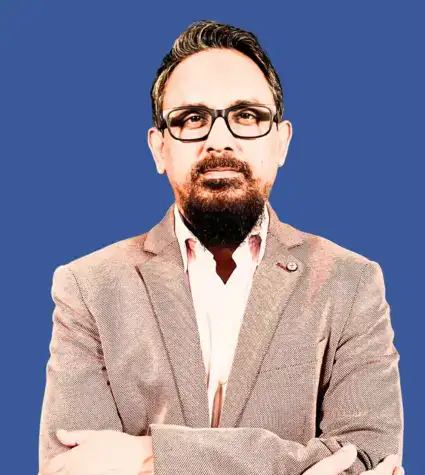
Sarwar Alam is a business leader, writer, and public speaker with nearly two decades of experience in leadership, strategy, and people development. He is the Founder of Sarwar Alam Insights and Founder & Global CEO of CATAGROW. He holds a Bachelor’s degree in Computer Applications and an MBA from Cochin University of Science and Technology (CUSAT), one of India’s premier institutions.
Over his career, Sarwar has worked across India, the Middle East, Africa, and Asia, holding senior leadership roles in global companies such as ExxonMobil, 3M, Diversey, and Betco. He is also the author of the bestselling book Bihari Boy in Kerala, which blends storytelling with lessons on resilience and identity.
Through Sarwar Alam Insights, he publishes in-depth articles on leadership, career growth, strategy, and life wisdom — helping readers think clearly, lead responsibly, and build purposeful careers.
Editorial review support by Sarwar Alam Insights.
Disclaimer: This article is based on personal experience and insights. It does not constitute financial, legal, or medical advice.